The real problem is not only whether your website ranks. It is whether search engines, AI systems, and potential clients can clearly understand what your business does, why it matters, and why they should trust you.
An AI visibility audit helps you check that foundation. It shows what makes your content easy to find, easy to interpret, and easy to recommend in search results, answer engines, and AI-generated responses.
Direct answer: what is an AI visibility audit?
An AI visibility audit is a structured review of your website to see how well it can be discovered, understood, and cited by search engines and AI assistants. It looks at content clarity, technical structure, entity signals, internal linking, schema readiness, and trust indicators.
The goal is simple: improve visibility, credibility, and qualified leads. If your pages are unclear, slow, poorly structured, or too generic, AI systems have less confidence in your content and users have less reason to contact you.
Table of contents
- Why does AI visibility matter for business performance?
- What should you check in an AI visibility audit?
- What technical foundation supports AI visibility?
- How should content be structured for SEO, GEO, and AEO?
- What is the difference between a basic SEO audit and an AI visibility audit?
- How do you run the audit step by step?
- What is the business impact of fixing these issues?
- FAQ
Why does AI visibility matter for business performance?
AI-driven search is changing how people discover companies. Buyers no longer always click through ten blue links. They ask a question, read a synthesized answer, and choose from the brands that are easiest to understand and trust.
If your website is not clear enough for AI systems, you lose visibility before the sales conversation even starts. That affects traffic, but more importantly it affects commercial performance, because fewer qualified visitors reach your pages.
This is especially relevant for service businesses that need trust before contact, such as construction company website development, physiotherapist website development tunisia, or notaries tunisia what professional style search intent, where users compare options carefully before taking action.
What should you check in an AI visibility audit?
A useful audit does not start with tools. It starts with the questions a buyer and an AI system need answered quickly.
1. Can the website explain the business in one clear sentence?
Each important page should say what the company does, who it helps, and what outcome it delivers. If the message is vague, AI systems may struggle to classify the page correctly.
2. Are the main pages built around real search intent?
Pages should match what people actually search for, not just internal company language. A page that answers a specific problem has a much better chance of ranking and being cited.
3. Is the content specific enough to be useful?
Generic content creates weak signals. Specific examples, service details, process explanations, and business outcomes help both users and AI understand your expertise.
4. Does the site show trust?
Trust signals include clear author or company information, contact details, service pages, case studies, reviews, and a professional structure. These elements matter because AI systems and users both look for credibility.
What technical foundation supports AI visibility?
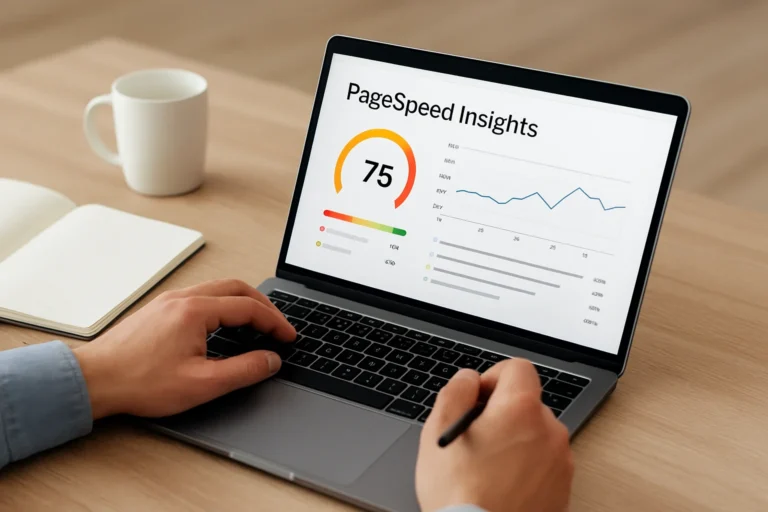
A slow website does not only create a technical problem. It creates a business problem, because visitors leave faster, Google has more difficulty crawling the pages and potential clients may lose trust before contacting the company.
| Audit area | What to check | Business impact |
|---|---|---|
| Performance | Page speed, Core Web Vitals, image weight, script bloat | Better retention, lower bounce rate, stronger trust |
| Crawlability | Indexing, robots rules, sitemap quality, broken pages | More pages discoverable by search engines |
| Mobile UX | Readable layout, tap targets, spacing, navigation | Higher conversion on mobile traffic |
| Information architecture | Logical menus, internal links, page hierarchy | Clearer topical authority and easier navigation |
These checks are not only for developers. They directly affect whether your website can support improve visibility credibility qualified traffic and turn it into leads.
How should content be structured for SEO, GEO, and AEO?
SEO, GEO, and AEO all reward clarity. The format may differ, but the principle stays the same: make the page easy to scan, easy to summarize, and easy to trust.
Use clear headings that answer questions
Headings should reflect the questions users ask. This helps search engines understand the page and helps AI systems extract direct answers.
Write short paragraphs with one idea each
Long blocks of text reduce readability. Short paragraphs improve mobile UX and make the page easier to quote or summarize.
Use concrete language
Say what the service does, what problem it solves, and what result the client can expect. This is especially effective for pages built around practical better visibility conversions.
Include supporting sections that prove expertise
Process steps, comparison tables, FAQs, and business impact sections help the page become more useful than a generic marketing article.
What is the difference between a basic SEO audit and an AI visibility audit?
| Basic SEO audit | AI visibility audit |
|---|---|
| Focuses mainly on rankings, metadata, and technical errors | Focuses on rankings, but also on AI understanding, citation potential, and answer readiness |
| Checks whether pages are indexed | Checks whether pages are understandable and quotable |
| Optimizes for search engines | Optimizes for search engines, answer engines, and AI assistants |
| Often stops at traffic | Connects visibility to trust and conversion |
A company can have a technically acceptable SEO setup and still be invisible in AI-generated answers if the content is too broad, too thin, or too poorly organized.
How do you run the audit step by step?
Step 1: Review the pages that matter most
Start with your homepage, main service pages, location pages, and top-performing articles. These pages usually carry the strongest business value.
Step 2: Test clarity
Ask a simple question: would a buyer understand this page in ten seconds? If not, the message needs work.
Step 3: Check crawl and index signals
Make sure search engines can access the page, read the content, and understand the page purpose without confusion.
Step 4: Review entity and trust signals
Confirm that your company name, services, expertise, and contact details are consistent across the site. This helps build a stronger digital identity.
Step 5: Improve internal linking
Link related pages together naturally. This helps users move through the site and helps search engines map your expertise.
Step 6: Rewrite weak content
Pages that are too generic should be rewritten around one clear intent. This is where many companies see the biggest gain in visibility and lead quality.
What is the business impact of fixing these issues?
AI visibility is not a vanity metric. It affects whether your company appears in the moments that matter, when a prospect is comparing options and deciding who to contact.
A clearer website can improve:
- brand credibility in competitive markets
- qualified traffic from high-intent searches
- conversion rates from better page clarity
- local visibility for service-based companies
- sales efficiency because prospects understand your offer faster
For businesses that need a strong digital presence, such as learning platform website development or service-led companies that want to generate applications reassure employers, the website must do more than exist. It must support the decision process.
Chez THE ROAD, l’objectif n’est pas seulement de créer un site web visuellement propre. L’objectif est de construire une présence digitale claire, rapide, crédible et capable de soutenir la croissance de l’entreprise.
FAQ
How often should an AI visibility audit be done?
At least once a year, and again after a major redesign, content migration, or SEO strategy change. For competitive industries, a quarterly review is often more useful.
Can a website rank well and still fail AI visibility checks?
Yes. A site can rank for some keywords but still be hard for AI systems to summarize if the content is vague, poorly structured, or missing trust signals.
Do I need technical skills to run this audit?
Not for the first pass. Business owners can review clarity, structure, and trust. A deeper audit should include technical checks, indexing, and performance analysis.
What is the fastest improvement to make?
Usually the homepage and main service pages. Clear positioning, stronger headings, and better internal linking can create quick gains in both visibility and conversion.
Should AI visibility be part of a redesign?
Yes. SEO should not be added after the website is finished. It should be planned from the beginning so structure, content, and technical choices support long-term visibility.
Need a website that search engines and AI can understand?
An AI visibility audit is not about chasing trends. It is about making your website easier to find, easier to trust, and more effective at generating business.
If your site needs a clearer structure, stronger SEO, better GEO readiness, or a redesign that supports conversion, THE ROAD can help you build the right foundation.
You have a web project, a redesign, or an SEO need? THE ROAD can support you with a clear, professional approach focused on results.