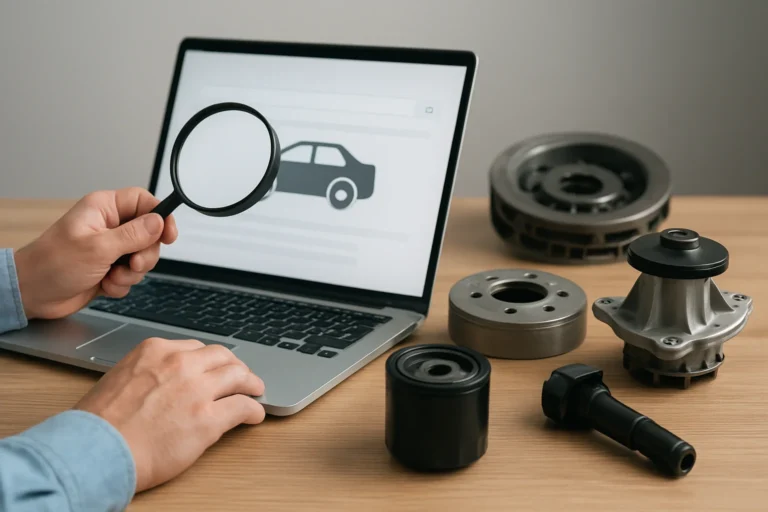
For an auto parts seller, the main challenge is not only being visible on Google. The real challenge is helping a buyer find the right part, for the right vehicle, with enough confidence to place an order or request a quote.
That is where SEO becomes a commercial tool, not just a traffic source. A well-structured website can improve visibility, reduce wrong inquiries, and turn technical product data into qualified leads.
Direct answer: what should an auto parts website focus on?
The priority is simple: organize your catalog around references, vehicle compatibility, and search intent. If your pages are clear, Google can understand them better, and customers can quickly confirm whether a part fits their car.
A strong SEO strategy for auto parts in Tunisia should combine product pages, compatibility data, internal linking, and local business signals. The goal is to be found, be understood, and generate contact.
Table of contents
- Why references matter more than generic product names
- How to structure vehicle compatibility pages
- What usually hurts SEO for auto parts sellers
- How to build a search-friendly catalog step by step
- SEO, AEO and GEO for auto parts businesses
- What this changes for sales and customer trust
- FAQ
Why do references matter more than generic product names?
Most buyers do not search only for “brake pads” or “alternator.” They search for a reference number, a brand code, or a part linked to a specific model. If your website ignores these references, you lose high-intent searches.
References are important because they reduce ambiguity. A customer who searches by code is usually close to buying. If your page matches that code clearly, you improve conversion and reduce back-and-forth messages.
This is also where technical structure matters. Search engines need clean product titles, consistent naming, and clear metadata to connect the page with the right query. A good structure helps both users and search engines.
| Content approach | SEO value | Business impact |
|---|---|---|
| Generic product name only | Low relevance for specific searches | More lost opportunities and more unclear inquiries |
| Reference + product type | Better match with buyer intent | Higher quality leads |
| Reference + vehicle + brand | Strong search relevance | Better conversion and fewer compatibility doubts |
How should vehicle compatibility be presented on the website?
Compatibility should never be hidden in a vague sentence at the bottom of the page. It should be visible, structured, and easy to scan. Buyers want to know if the part fits their vehicle before they contact you.
The best approach is to create clear compatibility blocks on each product page. These blocks can include brand, model, engine type, year range, and reference equivalences. This is especially important in a market where buyers compare several options before making a decision.
For businesses that want stronger digital performance, this is similar to the logic used in construction company website development or physiotherapist website development tunisia: the website must answer the user’s real question quickly and clearly.
Recommended compatibility fields
- Vehicle brand
- Model and generation
- Engine type or displacement
- Year range
- OEM reference and equivalent references
- Notes about exceptions or variants
When this information is structured correctly, you improve user experience and strengthen reliability information used by search engines and AI systems. That matters for both ranking and trust.
What are the most common SEO mistakes in auto parts e-commerce?
The most common problem is duplicated or thin product content. Many auto parts websites reuse the same description for dozens of items. That makes it difficult for Google to understand the difference between pages.
Another issue is poor filtering. If users can filter by reference, vehicle, and compatibility but those filters are not index-friendly, the site may become confusing for search engines. The result is weaker visibility and weaker crawl efficiency.
Some sellers also forget local search intent. A buyer in Tunisia may search in French, Arabic, or with mixed technical terms. If the website only uses one version of the term, it misses part of the market.
| Problem | Why it hurts | What to do instead |
|---|---|---|
| Duplicate product descriptions | Weak relevance and poor differentiation | Write unique content for each reference or family of parts |
| No compatibility details | Users hesitate and leave | Add structured vehicle fitment data |
| Unclear naming conventions | Search engines cannot classify pages well | Use consistent titles and reference formats |
| Ignored local search language | Missed traffic from real buyers | Align terms with how customers actually search |
How do you build a search-friendly auto parts catalog step by step?
1. Clean the product structure
Start by grouping products by category, reference family, and vehicle compatibility. Do not let the catalog grow randomly. A clean structure makes the website easier to navigate and easier to optimize.
2. Standardize titles and metadata
Each page should have a title that includes the reference, product type, and, when relevant, the vehicle model. This helps search engines understand the page and helps users confirm they are in the right place.
3. Add compatibility data to every relevant page
Compatibility data should be visible and consistent. If a part fits several models, list them clearly. If there are exceptions, mention them. This reduces return risk and improves customer trust.
4. Create internal links between related parts
Related references, alternatives, and compatible parts should link to each other. This supports navigation and helps search engines understand product relationships. It also helps users compare options faster.
5. Optimize for local and transactional intent
People searching for auto parts are usually close to action. They want availability, compatibility, price, and contact options. Your pages should answer those needs immediately, not after several clicks.
How do SEO, AEO and GEO work together for this type of business?
SEO helps your pages rank. AEO helps your content answer questions directly. GEO helps AI systems understand your business, your catalog, and your expertise.
For an auto parts seller, this means writing pages that are structured and explicit. Search engines and AI tools should be able to identify the reference, the vehicle fitment, the category, and the commercial intent without guessing.
This is also why clear website architecture matters in other sectors such as packaging manufacturer website tunisia or learning platform website development. The principle is the same: if the content is structured well, it becomes easier to index, cite, and convert.
What AI and search systems need
- Clear product names
- Consistent reference formats
- Readable compatibility data
- Direct answers to common questions
- Strong internal structure
When these elements are in place, your website becomes more useful for users and more understandable for search systems. That improves long-term SEO, not just short-term rankings.
What is the business impact of better reference and compatibility SEO?
The impact is not limited to traffic. Better SEO in this sector improves lead quality, reduces unnecessary calls, and increases the chance that a visitor becomes a buyer.
A slow or unclear website does not only create a technical problem. It creates a business problem, because visitors leave faster, Google has more difficulty crawling the pages and potential clients may lose trust before contacting the company.
For sellers handling many references, a professional website can also reduce operational friction. Sales teams spend less time explaining compatibility and more time closing qualified requests.
Chez THE ROAD, l’objectif n’est pas seulement de créer un site web visuellement propre. L’objectif est de construire une présence digitale claire, rapide, crédible et capable de soutenir la croissance de l’entreprise.
When should an auto parts seller contact a web agency?
You should contact an agency when your catalog is growing, your product pages are too generic, or your website is not generating the right inquiries. If customers keep asking the same compatibility questions, the site is not doing enough work.
You also need support when you plan a redesign, a migration, or a catalog restructuring. SEO should not be added after the website is finished. It should be planned from the beginning.
That is where THE ROAD can help with a practical approach: site structure, SEO, GEO, AEO, performance, and conversion-focused content built for business results.
FAQ
Should every auto part have its own page?
Not always, but every important reference should be easy to find. If several products are very similar, they can sometimes be grouped. The key is to keep the page clear and specific enough for search engines and buyers.
Is compatibility data really important for SEO?
Yes. Compatibility data improves relevance, reduces confusion, and helps users confirm fitment faster. It also gives search engines more context, which supports better indexing and stronger visibility.
Can a small auto parts seller compete with larger marketplaces?
Yes, especially on specific references, local searches, and niche compatibility queries. A smaller business can win through precision, better structure, and stronger local intent.
What is the biggest SEO mistake in this sector?
The biggest mistake is publishing generic pages without clear references or fitment details. That weakens visibility and makes the website less useful for serious buyers.
How can THE ROAD help?
THE ROAD helps businesses build websites that sell, with SEO structure, technical clarity, and content designed for visibility and conversion. The goal is to turn your catalog into a real commercial asset.
Ready to improve your auto parts website?
If you sell auto parts in Tunisia, your website should do more than list products. It should help buyers find the right reference, confirm compatibility, and contact you with confidence.
You have a web project, a redesign, or an SEO need? THE ROAD can support you with a clear, professional approach focused on visibility, credibility, and qualified leads.
Request a quote or discuss your project with THE ROAD.