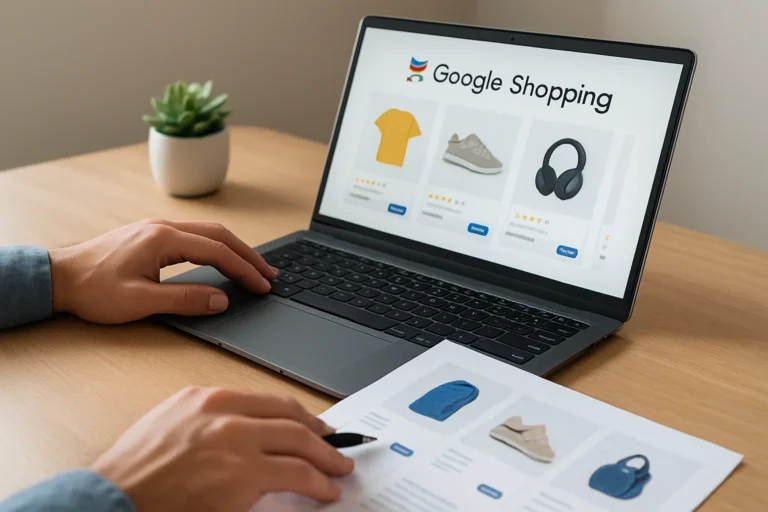
Google Shopping Free gives retailers a way to show products in Google results without relying only on paid ads. The opportunity is real, but the catalog must be prepared correctly before anything can perform.
The real problem is not only uploading products. It is building a product feed that Google can read, trust, and match with buyer intent. That is what drives visibility, qualified clicks, and commercial performance.
Direct answer: what do you need to do first?
You need a structured product catalog with accurate titles, clear descriptions, correct prices, stock status, and strong product identifiers. Then you need to connect it to Google Merchant Center and keep it updated.
If the feed is incomplete or inconsistent, Google may reject products, limit distribution, or show them less often. A clean catalog is not a technical detail. It is the foundation of visibility and conversion.
Table of contents
What is Google Shopping Free and why does it matter?
Google Shopping Free is the unpaid product visibility that can appear in Google Shopping surfaces and related product results. It helps stores show products to users who already have a buying intent.
For a business, this matters because the traffic is usually more qualified than generic visits. The user is not just browsing content. The user is comparing products, prices, and availability before making a decision.
How should you prepare your product catalog before publishing?
Start with the product data in your website or e-commerce platform. Every product must have a clear name, a unique SKU or identifier, a price, stock status, category, and a description that reflects the actual item.
Then clean the catalog. Remove duplicates, fix missing attributes, standardize naming, and make sure variants are handled properly. A product feed is not only a data export. It is a commercial inventory that Google must understand instantly.
Recommended preparation steps
- Audit the product database and remove incomplete items.
- Standardize product titles and categories.
- Check pricing, currency, and stock consistency.
- Prepare high-quality product images with clear backgrounds.
- Verify brand, GTIN, MPN, and SKU values where applicable.
- Test the feed before publishing it live.
Many companies underestimate this stage. A slow or messy catalog creates the same business problem as a slow website: fewer clicks, lower trust, and weaker commercial performance. This is why a professional process matters, especially when the goal is practical better visibility conversions.
Which product feed fields matter most?
Google relies on specific fields to understand what you sell. Some fields are mandatory, while others strongly influence how products are matched and displayed.
| Feed field | Why it matters | Business impact |
|---|---|---|
| Title | Helps Google understand the product quickly | Improves relevance and click-through rate |
| Description | Adds context and product details | Supports matching with search intent |
| Price | Must match the website exactly | Reduces disapprovals and trust issues |
| Availability | Shows whether the item can be purchased | Prevents wasted clicks on unavailable products |
| Image link | Strong visual signal for Shopping surfaces | Improves product appeal and engagement |
| GTIN / MPN / Brand | Identifies the product precisely | Helps Google compare and index the item correctly |
Product titles deserve special attention. A good title should include the brand, product type, key attribute, and model when relevant. The goal is not keyword stuffing. The goal is clarity for both users and search engines.
How do you publish the catalog in Google Merchant Center?
Once the catalog is clean, connect it to Google Merchant Center. This is where Google receives, checks, and distributes your product data. The feed can be uploaded manually, scheduled from a file, or connected through an e-commerce plugin or API.
Step-by-step publishing process
- Create or access your Merchant Center account.
- Verify and claim the website domain.
- Choose the feed source: file, scheduled fetch, plugin, or API.
- Map product data fields correctly.
- Review diagnostics and fix feed errors.
- Enable free listings where available.
- Monitor updates, disapprovals, and performance.
The technical setup should be stable from the start. If the catalog changes often and the feed is not synchronized, Google may show outdated prices or stock. That creates a poor user experience and can damage customer trust before the first contact or purchase.
What should you avoid when preparing a Shopping feed?
Most feed problems are avoidable. They usually come from weak data governance, not from Google itself.
- Using vague product titles like “New model” or “Best item”.
- Publishing products with missing price or stock data.
- Uploading low-quality or inconsistent images.
- Ignoring GTIN, brand, or MPN where required.
- Letting the feed drift away from the website content.
- Changing product pages without updating the catalog feed.
These issues reduce credibility. They also make it harder for Google to trust your catalog, which directly affects visibility. In many cases, the fix is not complicated, but it must be systematic.
How do SEO, GEO, and AEO improve product visibility?
Google Shopping Free is not only about feed compliance. It also benefits from a strong website structure, clear product pages, and content that answers search intent.
SEO helps Google understand the site architecture and product relevance. GEO improves local visibility when products or services are tied to a region or market. AEO helps your pages answer specific buyer questions in a direct and structured way.
For businesses that want a broader digital foundation, this approach is similar to improve visibility credibility qualified and to building a site that supports long-term discovery, not only one-time clicks. The same logic applies to service businesses too, including construction company website development and psychologist website development tunisia, where clarity and trust shape conversion.
At THE ROAD, the objective is not only to create a clean website. The objective is to build a digital presence that is fast, credible, and ready to support growth through search visibility, product discovery, and conversion.
What is the business impact of a well-prepared catalog?
A well-prepared catalog does more than improve rankings. It helps the right products appear for the right searches, which increases the chance of qualified traffic and sales.
That means better visibility, fewer disapprovals, stronger product trust, and a more efficient path from search result to purchase. For decision-makers, this is the real value: the catalog becomes a commercial asset, not just a technical file.
| Catalog quality | Search visibility | Trust | Conversion potential |
|---|---|---|---|
| Poor | Low | Weak | Limited |
| Average | Moderate | Mixed | Unstable |
| Well prepared | Higher | Strong | Better |
This is why catalog preparation should be treated as part of the sales system. Like learning platform website development, the value comes from structure, clarity, and a setup that supports user action.
FAQ
Do I need a paid campaign to use Google Shopping Free?
No. Free product listings can appear without paid ads if your Merchant Center account and feed are properly set up. Paid campaigns can still help scale visibility, but they are not required for free listings.
Why are my products not showing?
The most common reasons are feed errors, missing product identifiers, policy issues, or an unverified website. In some cases, the catalog is valid but not optimized enough for Google to distribute it widely.
How often should the feed be updated?
As often as your stock, prices, or product data change. For active stores, daily updates are usually safer. The goal is to keep Google aligned with the live website at all times.
Can one feed work for multiple countries?
Yes, but it must be adapted for language, currency, shipping, and market rules. A single feed can be expanded, but each market needs clean data and proper configuration.
Should I manage the feed manually or with automation?
Manual management works for small catalogs, but automation is better once the catalog grows. It reduces errors, saves time, and keeps the product data synchronized with the website.
Need a catalog that can actually perform?
Google Shopping Free is effective when the catalog is accurate, structured, and maintained with discipline. The technical setup matters, but the business outcome matters more: visibility, trust, and product clicks that can turn into sales.
Chez THE ROAD, the goal is not just to publish a feed. It is to build a digital system that supports visibility, credibility, and conversion from the first search result.
You have a web project, a redesign, or an SEO need? THE ROAD can support you with a clear, professional approach focused on results.