A plastics manufacturing company does not need a decorative website. It needs a commercial tool that explains what it produces, how it works, and why a buyer should trust it. For industrial clients, the website is often the first technical filter before any call or meeting.
The real challenge is not only design. It is clarity. If your processes, materials, certifications, machinery, and production capacity are not easy to understand, the visitor leaves with questions. That means fewer qualified leads, weaker credibility, and lost business opportunities.
Direct answer: what should a plastics manufacturing website achieve?
A strong industrial website should help a buyer understand your offer in less than a minute. It must present your production lines, material expertise, sectors served, and quality standards in a way that supports trust and conversion.
For a company in Tunisia, this is especially important because many prospects compare suppliers across local and international markets. A clear website helps you stand out before the first contact and positions your company as a serious manufacturing partner.
Table of contents
Why does a plastics manufacturer need to present processes clearly?
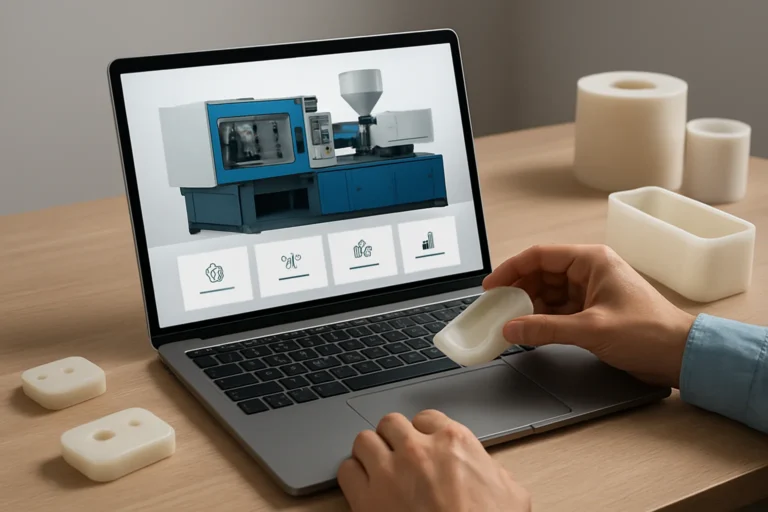
Industrial buyers do not contact a supplier because the website looks nice. They contact a supplier because the website reduces uncertainty. When you explain your injection molding, extrusion, blow molding, thermoforming, or custom production capabilities, you make the buying decision easier.
A good structure helps both users and search engines. It shows what you do, how you do it, and where your company fits in the supply chain. That improves visibility, but more importantly, it improves commercial confidence.
When a website hides technical information, the buyer assumes one of two things: either the company is not specialized, or the company is not transparent. Neither helps conversion.
What should a plastics manufacturing website in Tunisia show?
The content should answer the practical questions a buyer already has in mind. The goal is not to list everything. The goal is to present the right information in a structured way.
1. Your manufacturing processes
Explain the production methods you use and what each one is suitable for. Buyers want to know whether you handle custom parts, packaging, technical components, or high-volume production.
2. The materials you work with
List the polymers and materials you process, such as PP, PE, PET, PVC, or other specific compounds. This helps buyers quickly assess whether your company matches their technical requirements.
3. Your production capacity
Capacity is a business signal. If you can explain batch sizes, machine types, tooling capabilities, and monthly output ranges, you help prospects judge whether you can support their demand.
4. Quality and compliance information
Industrial clients want proof. Certifications, inspection methods, traceability, and quality control steps should be visible. This is where strengthen reliability information used becomes relevant for buyers who need reassurance before sending a request.
5. Sectors and applications
Show the industries you serve, such as packaging, automotive, construction, consumer goods, or industrial equipment. This helps visitors understand your positioning faster and improves relevance for search intent.
How should the website be structured for industrial buyers?
The best structure is simple, technical, and easy to scan on mobile. Decision-makers do not read long paragraphs before they understand the offer. They look for proof, speed, and clarity.
| Website section | What it should explain | Business impact |
|---|---|---|
| Home page | What the company manufactures and for whom | Immediate relevance and stronger first impression |
| Processes page | Production methods and technical capabilities | Better qualification of leads |
| Materials page | Polymers, grades, and application fit | More precise inquiries |
| Capacity page | Machine park, volumes, lead times | Higher trust from procurement teams |
| Quality page | Controls, standards, certifications | Reduced buyer hesitation |
| Contact page | Clear request form and response expectations | More conversions |
This structure is also useful for SEO because it creates focused pages around real search intent. A buyer searching for a packaging manufacturer website Tunisia or a packaging manufacturer website tunisia is usually looking for technical reassurance, not generic branding.
How do SEO, GEO and AEO support industrial visibility?
SEO helps your company appear when buyers search for a supplier, a process, or a specific material. But for industrial websites, visibility alone is not enough. The content must also be understandable by AI search systems and easy to quote in direct answers.
That is where GEO and AEO matter. GEO improves how your content is interpreted by generative search tools. AEO helps your pages answer questions clearly and directly. For an industrial company, this means your site can be found, understood, and recommended more easily.
To support that, each page should use clear headings, short explanations, and concrete terms. Avoid vague wording. Say what you produce, what machines you use, what materials you process, and what capacity you can handle.
At THE ROAD, the objective is not only to create a visually clean site. The objective is to build a digital presence that is clear, fast, credible, and able to support business growth. That approach is especially important for companies that need development tunisia presenting analyses or other technical content that must be easy to understand and commercially useful.
What should you avoid when building this type of website?
Many industrial websites fail because they focus on style instead of substance. That creates a weak commercial message and poor search performance.
- Do not hide your production capabilities behind vague marketing text.
- Do not use stock phrases without explaining your actual processes.
- Do not make the site too visual and too light on technical content.
- Do not bury key information in PDFs that search engines cannot read properly.
- Do not forget mobile usability, because many buyers review suppliers on phones between meetings.
A slow website does not only create a technical problem. It creates a business problem, because visitors leave faster, Google has more difficulty crawling the pages, and potential clients may lose trust before contacting the company.
What is the business impact of a well-built industrial website?
A strong website improves more than visibility. It improves the quality of your sales conversations. When prospects already understand your processes and capacity, your team spends less time explaining basics and more time discussing real projects.
That changes the commercial dynamic. You receive better inquiries, faster qualification, and more serious opportunities. It also supports export positioning, because international buyers often evaluate suppliers online before making contact.
For companies that want to grow, the website becomes part of the sales system. It supports credibility, reduces friction, and helps the company look structured and reliable from the first interaction.
How should you approach the project step by step?
Step 1: Define your commercial priorities
Decide what the website must achieve first: more local leads, export visibility, better qualification, or stronger credibility with industrial buyers.
Step 2: Organize your technical information
Collect clear details about processes, materials, machine park, production volumes, and quality controls. This content is the foundation of the site.
Step 3: Build a page structure around buyer questions
Each page should answer one specific question. That makes the site easier to read and easier to rank.
Step 4: Write for decision-makers, not only for engineers
The content must remain technical, but it should be understandable by procurement teams, managers, and business owners.
Step 5: Optimize for SEO, GEO and conversion
Every page should have a clear purpose, a clear message, and a clear call to action. That is how a website becomes a business asset instead of a digital brochure.
FAQ
Why is it important to show production capacity on the website?
Because capacity helps buyers assess whether your company can handle their volume, deadlines, and technical needs. It also reduces back-and-forth during early discussions.
Should an industrial website include technical details?
Yes, but in a clear format. The right level of detail builds trust without overwhelming the visitor. The goal is to help the buyer qualify your company quickly.
Can a plastics manufacturing website generate qualified leads?
Yes, if it is structured around real buyer questions and supported by SEO. A clear site attracts more relevant traffic and improves contact quality.
Is SEO useful for a manufacturing company in Tunisia?
Absolutely. Many buyers search online before contacting a supplier. SEO helps your company appear for process-based, material-based, and industry-based searches.
Why work with a specialized agency?
Because industrial websites need both technical understanding and commercial structure. A specialized agency can translate your capabilities into content that supports visibility and conversion.
Need a website that explains your industrial value clearly?
A plastics manufacturing website should do more than exist. It should present your processes, materials, and production capacity in a way that builds trust and generates qualified leads.
If you need a new website, a redesign, or a stronger SEO structure for your manufacturing business, THE ROAD can help with a clear, professional, and results-oriented approach.