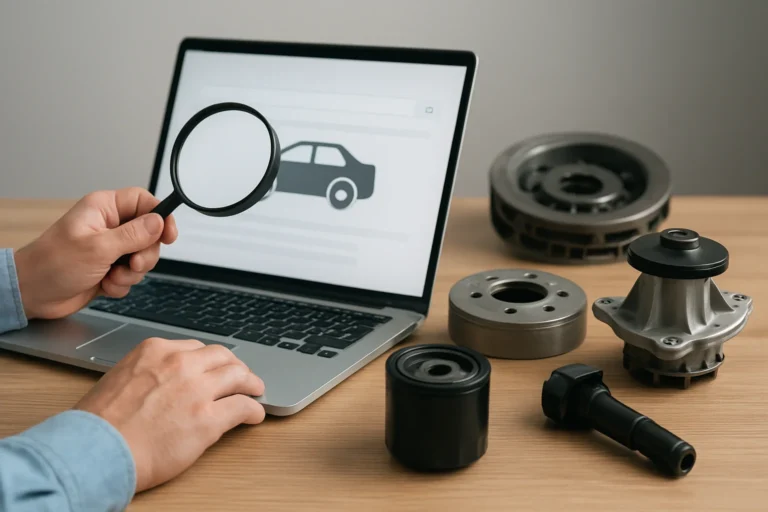
A laboratory website is not a simple presentation tool. For an industrial testing company, it must explain technical services clearly, reassure decision-makers, and make it easy to submit a request for analysis.
The real challenge is not only to look professional. The objective is to be found, be understood, and convert technical interest into qualified business opportunities.
Quick answer: what should an industrial testing laboratory website do?
A strong laboratory website should present your analyses in a structured way, explain your areas of expertise, show your accreditations and methods, and guide visitors toward a fast request form or direct contact.
It should also support SEO, local visibility, and technical credibility. In practice, the site must help engineers, procurement teams, quality managers, and industrial clients understand what you do without wasting time.
Table of contents
- Why a laboratory website matters for business
- What information to show on the website
- How to structure the pages for technical requests
- SEO, AEO and GEO for laboratory visibility
- What to avoid when building the site
- Recommended website development process
- Business impact of a well-built laboratory website
- FAQ
Why does a testing laboratory need a serious website?
An industrial testing laboratory sells trust before it sells a service. Clients want proof that your analyses are reliable, your methods are clear, and your team can handle technical requests without confusion.
A website helps you answer these expectations before the first call. It reduces friction, improves credibility, and filters out low-quality inquiries. That means better commercial efficiency and fewer wasted exchanges.
This is especially important in Tunisia, where many industrial buyers compare several providers before sending samples or requesting a quote. A weak website can make a capable laboratory look less structured than it really is.
What information should the website present?
The content should be practical, not decorative. Visitors are usually looking for specific answers: what analyses you perform, what industries you serve, how to send samples, and how fast they can expect a response.
Core information to include
- Types of tests and analyses offered
- Industries served, such as manufacturing, food, materials, construction, or environment
- Accreditations, standards, and quality procedures
- Sample submission process
- Turnaround times when possible
- Contact details and request form
- Team expertise and laboratory equipment
For industrial buyers, clarity matters more than design effects. A page that explains your services well can strengthen reliability information used by procurement teams and quality departments.
That same logic applies to other professional sectors such as notaries tunisia what professional, construction company website development, or packaging manufacturer website tunisia: the website must answer real business questions quickly and clearly.
How should the website be structured to receive technical requests?
A laboratory website should be organized around search intent, not around internal company departments. Visitors do not want to navigate a corporate maze. They want to find the right analysis and contact the right team.
Recommended page structure
| Page | Purpose | Business value |
|---|---|---|
| Home | Summarize services, trust signals, and main actions | Improves first impression and reduces bounce rate |
| Services / Analyses | Explain each test category in simple terms | Improves search visibility and qualification |
| Industries | Show relevance for specific sectors | Increases conversion from targeted visitors |
| Quality / Accreditations | Present standards, methods, and compliance | Builds credibility and trust |
| Contact / Request a quote | Make technical requests easy | Generates leads and shortens response time |
Each service page should answer one simple question: what problem does this analysis solve for the client? That approach is much more effective than listing technical terms without context.
What a good request form should ask
- Company name
- Contact person
- Type of analysis needed
- Industry or material concerned
- Sample quantity or project details
- Deadline or urgency
The goal is not to ask for too much. The goal is to collect enough information to qualify the request and respond efficiently.
How SEO, AEO and GEO help a laboratory get more qualified requests
SEO helps your laboratory appear when companies search for specific analyses, standards, or testing services. AEO helps your pages answer direct questions clearly enough to be used in search snippets or AI-generated answers. GEO helps your content remain understandable for AI systems that summarize and compare providers.
For a laboratory, this means writing content that is precise, structured, and easy to interpret. A page that clearly explains a test, its use, and its business value is more likely to rank and more likely to convert.
Practical content rules
- Use clear headings for each analysis or service
- Explain the purpose of the test in plain language
- Include industry-specific terms naturally
- Answer common buyer questions directly
- Keep paragraphs short and focused
This approach also supports other high-trust websites such as psychologist website development tunisia or physiotherapist website development tunisia, where clarity and credibility influence contact decisions. The same principle applies to industrial services: the site must reduce doubt.
What should you avoid when building a laboratory website?
Many technical websites fail because they focus on internal language instead of client needs. That creates confusion and weakens conversion.
Common mistakes
- Using too much technical jargon without explanation
- Hiding services inside vague menu labels
- Forgetting accreditations and quality proof
- Making the contact process too complicated
- Publishing pages that are too short to rank
- Ignoring mobile usability
A slow website does not only create a technical problem. It creates a business problem, because visitors leave faster, Google has more difficulty crawling the pages, and potential clients may lose trust before contacting the company.
Another common issue is treating the website like a brochure instead of a lead generation tool. A laboratory website should not only inform. It should support commercial performance.
What is the right process for developing this type of website?
A professional laboratory website should be planned before design starts. Content architecture, SEO structure, and conversion paths must be defined early. Otherwise, the site may look clean but fail to generate requests.
Step 1: Define the service model
List your analyses, target industries, and priority markets. This helps determine the page structure and keyword strategy.
Step 2: Build the content structure
Organize services, quality proof, and contact paths in a way that matches how clients search and compare providers.
Step 3: Write for clarity and trust
Each page should explain what the analysis does, why it matters, and how the client can request it.
Step 4: Design for mobile and speed
Decision-makers often review suppliers on mobile. The site must load fast, stay readable, and make contact easy.
Step 5: Optimize for SEO and conversion
Titles, headings, forms, and internal linking should support visibility and qualified lead generation from the start.
What is the business impact of a well-built laboratory website?
A well-structured website improves the quality of incoming requests. It helps visitors understand your capabilities before they contact you, which saves time for your team and improves sales efficiency.
It also strengthens your position against competitors that still rely on generic websites. In a technical market, clarity becomes a competitive advantage. When clients can quickly understand your scope, they are more likely to trust you with samples, audits, or recurring testing needs.
For industrial companies, the website is often the first filter before a call or email. If that first step is weak, the opportunity may never reach your team.
Chez THE ROAD, l’objectif n’est pas seulement de créer un site web visuellement propre. L’objectif est de construire une présence digitale claire, rapide, crédible et capable de soutenir la croissance de l’entreprise.
FAQ
Why does a laboratory website need SEO?
Because clients search for specific tests, standards, and service providers. SEO helps your laboratory appear when those needs are expressed online. It improves visibility and brings more qualified traffic.
Should a laboratory website focus more on design or content?
Both matter, but content comes first. A clean design helps trust, but clear service pages, accreditations, and contact paths are what drive conversion.
What is the most important page on the site?
The service pages are usually the most important. They explain what you do, help search engines understand your expertise, and guide visitors toward a request.
Can a laboratory website generate technical leads?
Yes, if it is built for search intent and conversion. A good site can bring requests from industrial buyers, quality managers, and procurement teams looking for a reliable provider.
When should a laboratory contact a web agency?
When the current site is unclear, outdated, slow, or not generating enough requests. It is also the right time if you are launching new services or targeting new industries.
Need a website that supports your laboratory business?
A laboratory website should do more than present your name and contact details. It should explain your analyses, reinforce trust, and turn technical interest into real business opportunities.
If you need a new website, a redesign, or a stronger SEO structure for your laboratory in Tunisia, THE ROAD can help you build a clear, credible, and conversion-focused digital presence.
You have a web project, a redesign, or an SEO need? THE ROAD can support you with a clear, professional approach focused on results.