For an industrial company, a website is not a decorative asset. It is part of the commercial process. Buyers, distributors, procurement teams, and partners often check the company online before they make contact.
The real problem is not only the design. It is whether the website can explain complex services clearly, build trust fast, and support qualified lead generation. That is where a specialized web agency in Tunisia makes a real difference.
Direct answer: what should an industrial website do?
An industrial website must do three things well: be easy to find, be easy to understand, and make it easy to contact the company. If it fails on one of these points, it weakens visibility, credibility, and conversion.
For industrial businesses, the website should support sales teams, answer technical questions, and reassure prospects before the first call. It should not just exist online. It should help the company win better opportunities.
Table of contents
- Why industrial companies need a specialized web agency
- What a good industrial website should include
- Which option is better: template site, freelancer, or agency?
- How SEO, GEO, and AEO support industrial visibility
- What is the business impact of a professional website?
- How a web project should be handled step by step
- FAQ
- Conclusion and contact
Why do industrial companies need a specialized web agency?
Industrial companies sell differently from retail brands or service startups. The sales cycle is longer, the products are more technical, and the decision-makers need proof before they engage. A generic website rarely supports that reality.
A specialized agency understands how to structure content around product lines, certifications, sectors served, technical capabilities, and request-for-quote journeys. That matters because buyers search with intent. They are not browsing for inspiration. They are evaluating suppliers.
This is also why industrial businesses should not treat their website like a simple brochure. It should support the commercial process, improve local visibility, and strengthen trust at every stage of the buyer journey.
What should a good industrial website include?
A strong industrial website must make the company easy to evaluate. Visitors should quickly understand what the business produces, what sectors it serves, and why it is a reliable partner.
Core elements that matter
- Clear positioning on the homepage
- Dedicated pages for products, services, and industries served
- Technical specifications presented in a simple format
- Proof elements such as certifications, references, and case studies
- Fast contact options for quotes and technical inquiries
- Strong mobile usability for decision-makers on the move
In many cases, industrial websites fail because they are too vague. The visitor leaves with questions instead of confidence. A good structure helps both users and search engines understand the business faster.
That is also why projects such as construction company website development, website development air conditioning, or learning platform website development follow the same principle: the structure must match the business model, not just the visual style.
Which option is better: template site, freelancer, or agency?
Industrial companies often hesitate between a low-cost template, a freelancer, or a web agency. The right choice depends on the level of complexity, the need for SEO, and the importance of commercial performance.
| Option | Strengths | Limits | Business impact |
|---|---|---|---|
| Template website | Fast and inexpensive to launch | Limited customization, weak differentiation, often poor SEO structure | Useful for testing, but rarely strong enough for serious industrial positioning |
| Freelancer | Flexible and cost-efficient for small projects | Quality depends on one person, limited strategic depth | Can work for simple needs, but risky for complex industrial websites |
| Web agency | Strategy, design, SEO, content, and technical execution in one process | Higher investment than a basic setup | Better for credibility, lead generation, and long-term growth |
For an industrial company, the cheapest option is not always the most efficient. A website that does not generate trust or inquiries becomes a cost, not an asset.
How do SEO, GEO, and AEO help industrial companies?
Industrial buyers search with specific intent. They may look for a supplier, a technical capability, a production process, or a local partner. If the website is not structured for search, the company becomes harder to find.
SEO: visibility in search engines
SEO helps the company appear when prospects search for relevant services, products, or sectors. For industrial businesses, this is essential because many opportunities start with a search, not with a referral.
GEO: visibility in AI-driven search experiences
GEO focuses on making content clear enough for AI systems to understand and cite. This means precise headings, direct answers, and strong topical structure. A well-written industrial page can improve visibility in both traditional search and AI search environments.
AEO: direct answers for high-intent questions
AEO helps the website answer questions quickly. This is useful when prospects want to know lead times, certifications, production capacity, service areas, or export readiness. Clear answers reduce friction and improve conversion.
For companies that want to improve visibility credibility qualified, these three layers should be planned from the start, not added after launch.
What is the business impact of a professional industrial website?
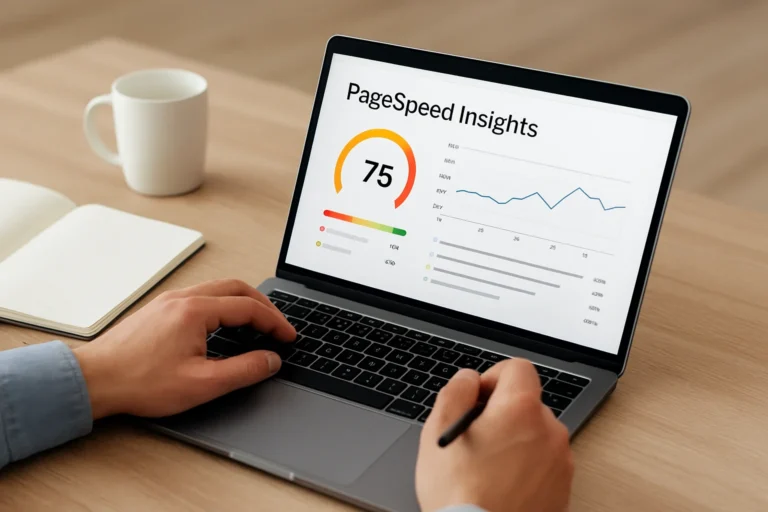
A slow website does not only create a technical problem. It creates a business problem, because visitors leave faster, Google has more difficulty crawling the pages, and potential clients may lose trust before contacting the company.
For industrial companies, the impact usually appears in four areas:
- More qualified leads from relevant searches
- Better credibility with procurement teams and partners
- Stronger support for sales and export discussions
- Better long-term SEO performance than a generic site
A website also helps sales teams. When a prospect receives a clear link with technical pages, references, and contact details, the conversation becomes easier. That improves commercial efficiency.
How should an industrial web project be handled step by step?
A serious project should follow a clear process. That reduces delays, avoids confusion, and improves the final business result.
1. Define the commercial objective
The first step is not design. It is clarity. The company must decide whether the website should generate inquiries, support export, recruit talent, or present technical expertise.
2. Structure the content around the buyer journey
The website should answer the questions prospects ask before they contact a supplier. That includes services, sectors, certifications, production capabilities, and contact paths.
3. Build the technical foundation
Speed, mobile performance, security, and clean code matter. They affect user experience, indexing, and trust. A weak technical base limits growth later.
4. Write for humans and search engines
Content should be simple, precise, and credible. It should explain the company without jargon overload. The goal is to be found, be understood, and generate contact.
5. Measure and improve
After launch, the website should be monitored. Pages that attract traffic but do not convert should be improved. This is how a website becomes a business tool, not just a publishing project.
Why THE ROAD is relevant for industrial companies
Chez THE ROAD, the objective is not only to create a website that looks clean. The objective is to build a digital presence that is clear, fast, credible, and capable of supporting business growth.
As a web agency in Tunisia, THE ROAD works on website creation, SEO, GEO, refonte, maintenance, and nearshore/offshore web outsourcing. That combination is useful for industrial companies that need both technical execution and commercial thinking.
Whether the need is a new platform, a redesign, or a stronger search strategy, the work should always connect structure, content, and conversion. That is what makes a website useful for management teams.
FAQ
Why is a generic website not enough for an industrial company?
Because industrial buyers need technical clarity, proof, and trust. A generic site often lacks the structure needed to explain products, processes, and differentiators clearly.
How long does an industrial website project usually take?
It depends on the number of pages, the content preparation, and the technical scope. A structured project usually takes several weeks, especially if SEO and content strategy are included.
Should SEO be planned before design?
Yes. SEO should not be added after the website is finished. It should be planned from the beginning so the structure, pages, and content support visibility from day one.
Can an industrial website generate qualified leads?
Yes, if it is built around buyer intent, technical credibility, and clear contact paths. The website must make it easy for the right visitor to take the next step.
When should an industrial company contact an agency?
When the current website is outdated, invisible, hard to manage, or not producing leads. It is also the right time when the company wants to grow in new markets or improve its online positioning.
Conclusion: a website should support industrial growth
For an industrial company, the website is part of the sales infrastructure. It should improve visibility, support credibility, and help convert interest into qualified contact.
If the current site does not reflect the company’s real capabilities, it is probably limiting growth. A professional approach can fix that by combining strategy, structure, SEO, and conversion-focused execution.
You have a web project, a redesign, or an SEO need? THE ROAD can support you with a clear, professional approach focused on results.