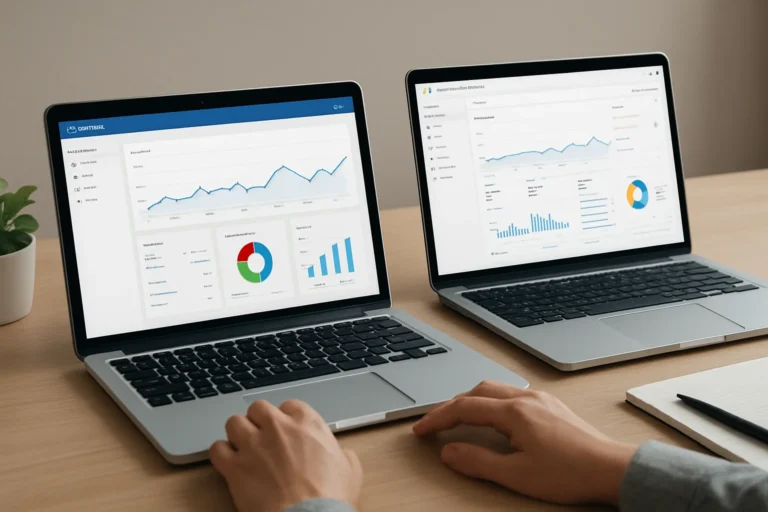
The real problem is not only the design. For an event agency, the website has to convince a visitor quickly, explain the offer clearly, and make it easy to request a quote.
In Tunisia, where clients compare several providers before choosing one, a website must do more than exist. It must support credibility, local visibility, and commercial performance.
Direct answer: what should an event agency website do?
A professional event agency website should present services, show proof of experience, answer common client questions, and generate contact requests. If it does not support these four goals, it is not doing its job.
Table of contents
Why does an event agency need a professional website?
Event services are sold on trust. A client is not only buying decoration, logistics, or coordination. They are buying reliability, timing, and the ability to manage pressure.
A website helps prove that reliability before the first call. It shows the type of events handled, the quality of execution, the team’s method, and the level of professionalism expected by the client.
This is why a weak website creates a business problem, not just a design problem. It can reduce inquiries, weaken the brand image, and make the agency look smaller or less structured than it really is.
For agencies that want to improve visibility credibility qualified, the website becomes a sales asset, not a simple presentation page.
What should an event agency website include?
A good structure helps both users and search engines. It also helps sales teams because it answers objections before the first meeting.
Core pages and sections
- Home page with a clear value proposition
- Services page for weddings, corporate events, launches, and private events
- Portfolio or case studies with real examples
- About page to build trust and explain the agency’s approach
- Contact page with a short form and direct contact options
- FAQ page to answer pricing, timing, and process questions
Trust signals that matter
Visitors want proof. They want to know who is behind the agency, what kind of events were delivered, and how the team manages deadlines and vendors.
Useful trust signals include testimonials, client logos, event photos, service guarantees, and clear contact details. These elements increase confidence and support conversion.
Conversion elements that should not be missing
The site should guide users toward action. That means visible calls to action, short forms, fast page loading, and a clear path from service page to contact request.
What are the options: template, custom site, or redesign?
Not every agency needs the same solution. The right choice depends on the current brand position, competition, and growth goals.
| Option | Best for | Strengths | Limits |
|---|---|---|---|
| Template website | Small agencies with a limited budget | Fast to launch, lower cost | Less differentiation, weaker SEO structure, limited conversion design |
| Custom website | Agencies that want a stronger brand and better lead generation | Better UX, stronger credibility, scalable structure | Requires strategy and a larger investment |
| Website redesign | Agencies with an existing site that no longer performs | Improves performance without starting from zero | Needs a careful migration plan to protect SEO |
For most serious agencies, a custom build or a strategic redesign is the better long-term choice. The objective is simple: be found, be understood, and generate contact.
How should SEO, GEO, and AEO be handled?
SEO should not be added after the website is finished. It should be planned from the beginning, especially for a service business that depends on local visibility and qualified leads.
SEO for search visibility
The site should target service keywords, local intent, and event-related queries that potential clients actually search. Titles, headings, internal structure, and page copy must all support this.
For example, an agency that also serves corporate clients may need content aligned with professional reassure european buyers, especially when working with international companies or foreign event partners.
GEO for AI search and citation readiness
GEO matters because AI search engines prefer clear, structured, and factual content. Pages should explain services in simple language, use direct answers, and avoid vague claims.
That means the website should clearly state what the agency does, where it works, who it serves, and how the process works. Clear structure increases the chance of being understood and cited by AI systems.
AEO for direct answers
AEO is about answering questions in a way that search engines can extract quickly. Short sections, direct headings, and concise explanations help the site appear in answer-focused results.
This is especially useful for questions about pricing, timelines, event types, and service scope.
What is the right process to build the site?
A professional website project should follow a clear method. Without structure, the result often looks acceptable but performs poorly.
Step 1: define the business goals
Start with the commercial objective. Is the priority more quote requests, better brand positioning, or stronger SEO visibility? The answer changes the structure of the site.
Step 2: map the services and audience
Event agencies often serve different segments: weddings, corporate events, private celebrations, and brand activations. Each segment has different expectations and search intent.
Step 3: build the content structure
The site architecture should reflect how clients think. They usually want to know what you do, what it costs, what results you deliver, and how quickly you can respond.
Step 4: design for trust and speed
Visual quality matters, but speed and clarity matter more. A slow website does not only create a technical problem. It creates a business problem, because visitors leave faster, Google has more difficulty crawling the pages and potential clients may lose trust before contacting the company.
Step 5: optimize before launch
Before publishing, the site should be checked for mobile usability, metadata, internal links, form functionality, and indexation readiness. Launching without these checks often leads to avoidable losses.
What is the business impact of a well-built event agency website?
A strong website can improve lead quality, reduce wasted sales time, and strengthen the agency’s position in the market. It helps the business appear more organized, more credible, and more capable of handling serious projects.
This is particularly important in competitive sectors where clients compare multiple providers and often decide based on first impressions. A clear site can shorten the sales cycle and increase the number of qualified inquiries.
For agencies that also need support with learning platform website development, recruitment agency website development, or even construction company website development, the same principle applies: the website must match the business model, not just the visual identity.
At THE ROAD, the objective is not only to create a site that looks clean. The objective is to build a digital presence that is fast, credible, easy to understand, and capable of supporting growth.
FAQ
How much does an event agency website cost in Tunisia?
The cost depends on the number of pages, custom design needs, content creation, and SEO requirements. A simple site costs less, but a strategic website usually delivers better business value.
How long does it take to build the website?
Most projects take a few weeks to a few months depending on scope, content readiness, and approval speed. A clear process usually saves time and reduces rework.
Should an event agency use a template or a custom website?
A template can work for a small start, but a custom website is usually better for credibility, SEO structure, and conversion. It also helps the agency stand out in a crowded market.
Can the website help generate more qualified leads?
Yes. A well-structured website can filter the right prospects, answer objections early, and guide visitors toward contact. That improves lead quality and sales efficiency.
Do event agencies need SEO from the start?
Yes. SEO should be part of the site architecture, content planning, and technical setup from day one. Fixing it later is usually more expensive and less effective.
Need a website that supports your growth?
For an event agency in Tunisia, the website is not a side project. It is a commercial tool that influences trust, visibility, and conversion.
If you want a site that reflects your positioning and helps you win more qualified leads, THE ROAD can support you with a clear, professional, and results-oriented approach.
Vous avez un projet web, une refonte ou un besoin SEO ? THE ROAD peut vous accompagner avec une approche claire, professionnelle et orientée résultats.