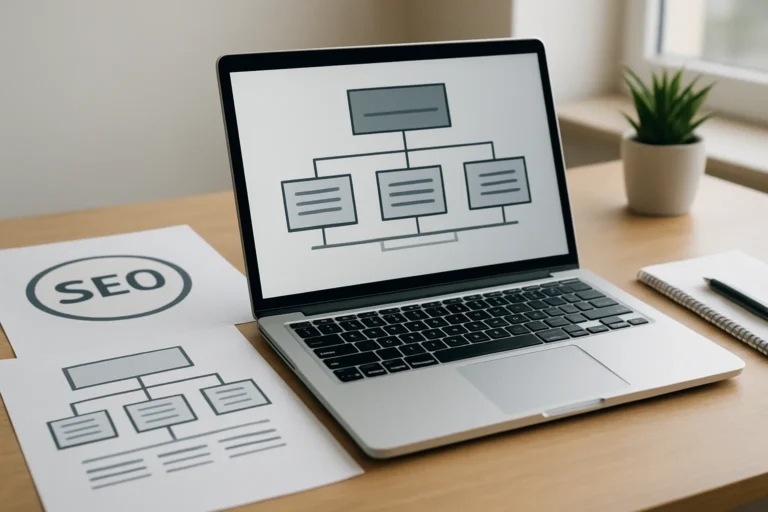
A link building campaign can strengthen rankings, but only if the partner sites are chosen with business logic, not just by price or domain metrics. The real goal is not to collect links. The goal is to improve visibility, credibility, and qualified traffic without damaging the brand.
Many companies buy backlinks too quickly and end up with weak placements, irrelevant sites, or risky networks. A professional approach focuses on search intent, editorial quality, and long-term SEO value.
Direct answer: what makes a good partner site?
A good partner site is relevant to your market, has real editorial standards, attracts visible traffic, and can place your content in a context that makes sense for users and search engines. If the site exists only to sell links, the value is usually limited and the risk is higher.
Table of contents
Why does the choice of partner sites matter so much?
Because a backlink is not only a technical signal. It is also a trust signal. When your brand appears on a relevant and credible website, search engines can better understand your positioning, and users are more likely to trust your company.
The opposite is also true. A link from a low-quality site can create no value, waste budget, and sometimes weaken the profile of the domain over time. The problem is not only SEO. It is also commercial reputation.
This is why link building should be treated like a media investment, not a volume purchase.
How should you evaluate a partner website before buying a link?
Start with relevance. The site should cover a topic close to your business, your audience, or your market. A contextual link placed in a meaningful article is far stronger than a random link on a generic page.
Then check whether the site looks alive. A real partner website usually has consistent publishing, visible categories, a clear editorial structure, and content that reads like it was written for humans, not for link sellers.
Key checks to perform
- Topical relevance to your sector
- Real editorial content, not only sponsored posts
- Organic visibility and indexed pages
- Reasonable outbound link profile
- Traffic quality and audience fit
- Language and geographic alignment
- Brand safety and content consistency
If you are working on a local market, the site should also support local visibility. For example, a business offering notaries tunisia what professional services should not buy links from unrelated international blogs just because they have a high score.
How do you evaluate a link building proposal?
A serious proposal should explain where the links will be placed, what type of content will support them, how the sites were selected, and what the expected editorial format is. If the proposal only lists metrics and prices, it is incomplete.
Ask for clarity on the following points:
- What is the topical theme of each site?
- Will the link be inserted in a new article or an existing page?
- Is the content written for the audience or only for SEO?
- How many outbound links will appear on the page?
- Will the placement be permanent or temporary?
- Can the provider show examples of similar placements?
A professional agency should also explain the risk level of each opportunity. Not every site deserves the same budget. A smaller but highly relevant site can outperform a larger generic one.
At THE ROAD, the objective is not to buy links blindly. The objective is to build a clean and credible authority profile that supports ranking, conversion, and long-term SEO.
How do good opportunities compare with weak ones?
| Criteria | Good partner site | Weak partner site |
|---|---|---|
| Topical relevance | Close to your sector and audience | Generic or unrelated |
| Editorial quality | Real content, readable structure, clear context | Thin articles, repetitive wording, low value |
| Traffic | Visible organic audience or clear readership | Little or no real traffic |
| Outbound links | Controlled and natural | Many sponsored links on every page |
| Business value | Supports trust, visibility, and referral potential | Mostly cosmetic, limited impact |
| Risk | Low to moderate when selected carefully | Higher risk of wasted budget or weak SEO impact |
What is the right process for selecting sites and validating a campaign?
1. Define the business goal
Before choosing sites, clarify the objective. Do you want stronger rankings, better local visibility, brand authority, or support for a new service page? The answer changes the type of partner you need.
2. Map the target pages
The link should support a page that matters commercially. That might be a service page, a category page, or a content page built to capture search intent. A backlink without a clear landing page strategy is a missed opportunity.
3. Shortlist relevant sites
Look for sites that speak to your audience, your industry, or a related business context. For example, a company investing in construction company website development should prioritize industry publications, business portals, or local commercial media rather than broad lifestyle sites.
4. Review editorial quality
Read a few articles. Check whether the content is useful, structured, and credible. If the site already publishes poor content, your link will not benefit from being placed there.
5. Compare the proposal against business value
Do not compare only prices. Compare relevance, placement quality, content quality, and risk. A cheaper link can become expensive if it brings no measurable value.
What should you consider for SEO, GEO and AEO?
SEO still matters, but modern link building must also support GEO and AEO. That means the content around the link should be clear enough for search engines and AI systems to understand the topic, the entity, and the relationship between pages.
For GEO, the partner site should reinforce geographic or market relevance when location matters. For AEO, the surrounding content should answer a real question clearly, so the link appears inside a useful explanation rather than a forced insertion.
This is especially important for service businesses such as psychologist website development tunisia or physiotherapist website development tunisia, where trust, expertise, and local relevance influence both search performance and conversion.
A link placed in a well-structured article with a clear topic is more likely to be understood, indexed, and valued over time.
What is the business impact of choosing the wrong sites?
The impact is not limited to rankings. A weak campaign can waste budget, slow down growth, and create a false sense of progress. The company sees links being delivered, but the commercial results do not move.
On the other hand, a well-selected campaign can improve visibility for competitive pages, support brand authority, and bring qualified traffic that is more likely to convert. That is why link building should be connected to the company’s sales goals, not treated as a standalone SEO task.
If your business also needs a broader digital foundation, link building works better when the website itself is solid. A strong technical base, clear content structure, and conversion-focused pages make every backlink more valuable. This is true for sectors as different as learning platform website development and recruitment agency website development.
FAQ
How many metrics should I use to judge a partner site?
Use several, not one. Relevance, editorial quality, traffic, outbound link behavior, and brand safety matter more than a single authority score. One metric alone can be misleading.
Is a high domain score enough to justify a link?
No. A high score does not guarantee relevance, traffic, or trust. A strong-looking site can still be a poor business choice if the audience does not match your market.
Should I prefer new articles or existing pages?
It depends on the site and the context. New articles can be cleaner and more relevant, while existing pages may have more history. The key is editorial fit and natural placement.
What should I avoid in a proposal?
Avoid vague promises, hidden site lists, mass placements, and proposals that do not explain where the link will live. If the provider cannot justify the choice, the campaign is weak.
When should I contact an agency?
Contact an agency when you need a structured campaign, when the market is competitive, or when you want to avoid risky purchases. Professional support helps you choose better sites and protect your budget.
Need a clearer, safer link building strategy?
Choosing partner sites is not a volume game. It is a strategic decision that affects visibility, credibility, and conversion. The best campaigns are built on relevance, editorial quality, and business logic.
Chez THE ROAD, l’objectif n’est pas seulement de créer un site web visuellement propre. L’objectif est de construire une présence digitale claire, rapide, crédible et capable de soutenir la croissance de l’entreprise.
You have a web project, a redesign, or an SEO need? THE ROAD can support you with a clear, professional approach focused on results. Request a quote or ask for an audit if you want a link building campaign that makes business sense.