The real question is not whether SEO, GEO or AEO is “better.” The real question is which one helps your business be found, trusted and chosen by the right audience.
Search behavior has changed. People still use Google, but they also ask AI tools direct questions and expect fast, precise answers. A serious digital strategy now has to cover all three layers.
Quick answer: what is the difference between SEO, GEO and AEO?
SEO helps your website rank in search engines. GEO helps your content be understood and cited by AI-driven search experiences. AEO helps your brand appear as the direct answer to a user’s question.
For a business, this means one thing: visibility is no longer only about rankings. It is also about being selected, summarized and trusted across different search interfaces.
Table of contents
- What is SEO and why does it still matter?
- What is GEO and how does it change content strategy?
- What is AEO and why does direct answering matter?
- SEO vs GEO vs AEO: comparison table
- What is the business impact of each approach?
- How should a company structure its content strategy?
- How THE ROAD approaches SEO, GEO and AEO
- FAQ
What is SEO and why does it still matter?
SEO is the practice of improving a website so it can rank in organic search results. It covers technical performance, content quality, internal linking, page structure, authority and user experience.
For a business, SEO is still the foundation. If your site is not crawlable, understandable and relevant, you lose qualified traffic before the conversation even starts.
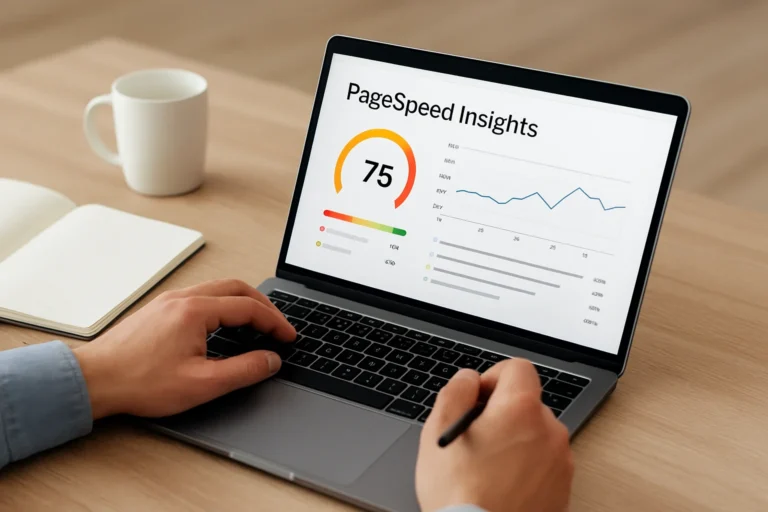
A slow website does not only create a technical problem. It creates a business problem, because visitors leave faster, Google has more difficulty crawling the pages and potential clients may lose trust before contacting the company.
SEO also supports commercial intent. Someone searching for construction company website development or recruitment agency website development is not browsing casually. They are looking for a provider and comparing options. SEO helps you appear at that moment.
What is GEO and how does it change content strategy?
GEO stands for Generative Engine Optimization. It focuses on making your content easy for AI systems to understand, extract and cite when they generate answers.
This matters because users increasingly ask AI tools for recommendations, explanations and comparisons. If your content is unclear, poorly structured or too vague, it is less likely to be used as a source.
GEO is not a replacement for SEO. It is an additional layer. A page that works for GEO usually has clear headings, concise definitions, strong topical coverage and factual language that AI systems can process easily.
In practical terms, GEO favors content that answers questions directly. It also rewards pages that show expertise, use consistent terminology and organize information in a way that is easy to summarize.
For companies in specialized sectors, this can be decisive. A page about psychologist website development Tunisia or physiotherapist website development Tunisia must explain service relevance, trust signals and conversion logic in a way that AI can interpret clearly.
What is AEO and why does direct answering matter?
AEO stands for Answer Engine Optimization. Its objective is to help your content appear as the direct answer to a search question, whether in Google snippets, voice search or AI answer boxes.
AEO is about precision. The user asks a question, and your content provides the clearest possible response in the shortest useful format.
This is important because many decision-makers do not want a long explanation first. They want the answer, then the details. If your page gives that answer quickly, it improves trust and engagement.
AEO works especially well for FAQ sections, comparison pages, service pages and content that targets specific commercial questions such as notaries tunisia what professional or daycare kindergarten website development.
SEO vs GEO vs AEO: comparison table
| Approach | Main goal | Best for | Business impact |
|---|---|---|---|
| SEO | Rank in search engines | Organic traffic, service pages, long-term visibility | More visits, stronger lead generation, better acquisition cost |
| GEO | Be cited by AI-generated answers | Structured content, expert explanations, topic authority | More brand exposure in AI search experiences |
| AEO | Become the direct answer | FAQs, snippets, voice search, question-based queries | Higher visibility for intent-driven searches and faster trust |
These three approaches overlap, but they do not serve exactly the same search behavior. A strong website should support all three instead of choosing only one.
What is the business impact of each approach?
The business impact is not theoretical. Each layer affects how people discover your company, how they judge your credibility and how quickly they contact you.
SEO impact
SEO drives qualified traffic from people already looking for a solution. It builds long-term visibility and reduces dependence on paid ads.
GEO impact
GEO increases the chance that your expertise is referenced in AI-generated answers. That can strengthen brand awareness before a user even reaches your site.
AEO impact
AEO improves your chances of being selected for direct answers. That matters when users want fast clarity and are comparing providers.
The objective is simple: be found, be understood and generate contact. If your content only attracts traffic but does not convert, it is not doing its job.
How should a company structure its content strategy?
A good structure helps both users and search engines. It also helps AI systems identify what your page is about and when it should be shown.
Step 1: Build the technical foundation
Your website must load quickly, be mobile-friendly, use clean navigation and allow search engines to crawl important pages. Without that foundation, content strategy loses impact.
Step 2: Align each page with one search intent
Do not try to make one page answer everything. A service page, a comparison page and an FAQ page each serve a different purpose. Clarity improves ranking and conversion.
Step 3: Write for humans first, then optimize for machines
Use direct language, short paragraphs and precise headings. Explain what the service does, who it is for, why it matters and what the next step should be.
Step 4: Add question-based sections
FAQ blocks, short definitions and comparison tables help with AEO and GEO. They also make the page easier to scan on mobile.
Step 5: Connect content to conversion
Every important page should lead somewhere: contact form, quote request, audit request or consultation. Visibility without conversion is incomplete.
How THE ROAD approaches SEO, GEO and AEO
Chez THE ROAD, the objective is not only to create a website that looks clean. The objective is to build a digital presence that is fast, credible, easy to understand and capable of supporting business growth.
That means SEO is planned from the beginning, not added at the end. It also means content is structured for search intent, AI readability and conversion.
For companies that need a new website, a redesign or a stronger content strategy, THE ROAD works on the full chain: technical foundation, content structure, local visibility, GEO readiness and AEO-friendly formatting.
This is especially useful for businesses that need more than design. They need a site that supports commercial performance, builds trust and turns visibility into qualified leads.
Which approach should you prioritize first?
If your website is weak technically, start with SEO. If your content is already in place but not being cited or summarized well, strengthen GEO and AEO. In most cases, the right answer is not choosing one tactic. It is building a strategy where all three reinforce each other.
For a new website, the best decision is to design the structure, content and technical setup together. That avoids costly rework and creates a stronger foundation for long-term SEO.
FAQ
Is GEO replacing SEO?
No. GEO extends SEO by preparing content for AI-generated answers. SEO remains essential for rankings, traffic and discoverability.
Does AEO only matter for voice search?
No. AEO also matters for featured snippets, direct answers and AI answer boxes. It is about answering questions clearly and quickly.
Can one page be optimized for SEO, GEO and AEO at the same time?
Yes. A well-structured page can support all three if it is clear, relevant, technically sound and written around real user intent.
What is the biggest mistake businesses make?
They publish content without a strategy. The page may exist, but it does not target the right intent, answer the right questions or support conversion.
When should I contact an agency?
When your website is not generating enough qualified leads, when your content is not ranking, or when you need a structure that supports SEO, GEO and AEO from the start.
Conclusion
SEO, GEO and AEO are not buzzwords. They describe three different ways people discover, evaluate and trust a business online. A serious website strategy should cover all three.
If you want stronger visibility, better credibility and more qualified leads, your website needs more than good design. It needs a structure built for search intent, AI understanding and conversion.
Vous avez un projet web, une refonte ou un besoin SEO ? THE ROAD peut vous accompagner avec une approche claire, professionnelle et orientée résultats.