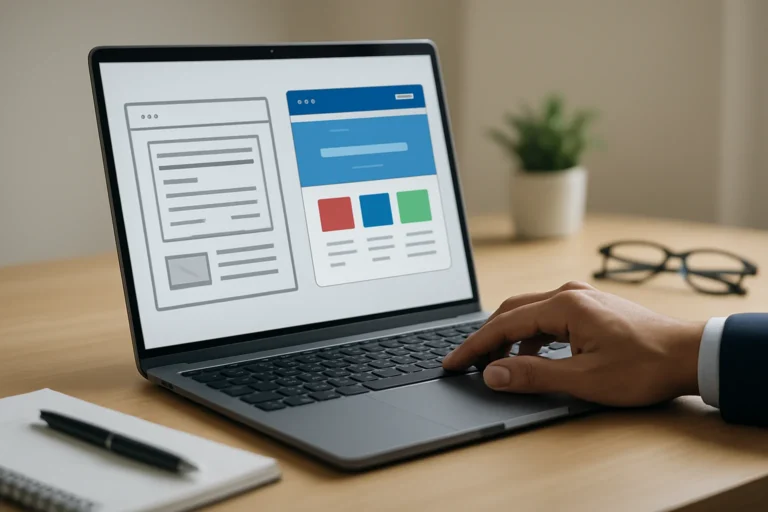
For aluminium and PVC joinery companies in Tunisia, the website is not just a showcase. It is often the first step in the sales process. Before a client calls, they want to see your models, understand your finishes, compare options, and judge whether your company looks reliable enough to handle the project.
The real challenge is not only to look professional. The objective is to present your products clearly, answer the right questions early, and filter enquiries so your team receives more serious leads and fewer vague requests.
Direct answer: what should a joinery website do?
A professional website for an aluminium and PVC joinery business should showcase your models, explain your technical options, build trust, and qualify project requests before they reach your sales team.
That means clear product pages, visible technical details, strong local credibility, and a contact path designed for people who are ready to request a quote.
Table of contents
- Why your website matters for aluminium and PVC joinery
- What to show on a joinery website
- How to qualify projects before they reach your inbox
- What structure works best for conversion and SEO
- SEO, GEO and AEO for joinery companies
- Business impact: visibility, trust and qualified leads
- How THE ROAD approaches this type of project
- FAQ
Why does a joinery company need more than a simple showcase website?
Because a website that only displays a few photos does not help the business enough. It may look acceptable, but it does not explain the offer, does not guide the visitor, and does not help the company win better projects.
A serious joinery website has to support commercial performance. It should help visitors understand the difference between aluminium and PVC solutions, compare models, and quickly identify whether your company can handle their type of project.
A slow or poorly structured website creates a business problem, not only a technical one. Visitors leave faster, Google has more difficulty understanding the pages, and potential clients may lose trust before they ever request a quote.
What should you show on a website for aluminium and PVC joinery?
The website should present your models in a way that is easy to scan and easy to compare. Many companies make the mistake of showing products without context. That creates interest, but not clarity.
Each model should answer practical questions: what is it used for, what are the available finishes, what are the main technical advantages, and what type of project is it suitable for?
Essential content to include
- Windows, doors, sliding systems, shutters, and other main product families
- Material options and finish variations
- Technical features such as insulation, durability, security, and maintenance
- Residential and commercial use cases
- Project galleries with real installations
- Service areas and contact details for local visibility
| Website element | Business value | Common mistake |
|---|---|---|
| Product pages | Help visitors understand the offer quickly | Listing products without explanation |
| Technical details | Build credibility and reduce uncertainty | Using vague marketing phrases only |
| Project photos | Show proof of execution and quality | Using generic or low-quality visuals |
| Contact forms | Capture qualified leads | Asking too little or too much information |
How do you qualify projects before they become low-quality enquiries?
Qualification starts on the website, not after the call. If the website is too vague, you will receive more messages, but not necessarily better ones. A good website helps filter the right projects by giving enough detail for serious prospects to self-identify.
This is especially useful for companies that handle different project sizes, custom work, or both residential and professional clients. The goal is to reduce friction for serious buyers and reduce noise for your team.
Practical ways to qualify leads
- Separate residential and professional services
- Show the types of projects you accept
- Add clear service zones or geographic coverage
- Use quote forms that ask for dimensions, project type, and timeline
- Explain what information is needed for an accurate estimate
This approach improves conversion because the visitor understands what to do next. It also saves time for the sales team and increases the chance of receiving better project briefs.
What website structure works best for conversion and SEO?
A good structure helps both users and search engines. For a joinery business, the site should be organised around search intent, not just around internal company logic.
People do not search for your company name first. They search for windows, PVC doors, aluminium sliding systems, custom joinery, or a local supplier in Tunisia. Your website should reflect that reality.
A structure that works
- Home page with a clear value proposition
- Dedicated pages for each product family
- Project gallery or references page
- About page focused on trust, experience, and process
- Contact page with a strong quote request form
- FAQ section answering common technical and commercial questions
| Page type | SEO role | Conversion role |
|---|---|---|
| Home page | Reinforces brand and main services | Directs visitors to the right action |
| Product pages | Targets specific search intent | Explains the offer in detail |
| Project gallery | Supports topical authority | Builds trust through proof |
| Contact page | Captures local and branded searches | Turns interest into enquiries |
How should SEO, GEO and AEO be handled for a joinery website?
SEO is not only about ranking. It is about being found for the right searches and making sure the page answers the intent behind them. For a joinery company, that means product pages, service pages, and local visibility.
GEO matters because many prospects search by city or region when they need a supplier or installer nearby. A localised structure helps Google understand where you operate and helps clients trust that you can serve their area.
AEO matters because many users want quick answers. They ask whether aluminium is better than PVC, what the lead time is, or what information is needed for a quote. Clear headings, concise answers, and structured content help search engines extract those answers.
What to optimise
- Page titles and headings aligned with search intent
- Clear descriptions of each product and service
- Local references for service areas in Tunisia
- Fast loading and mobile-friendly layouts
- Internal linking between products, services, and contact pages
SEO should not be added after the website is finished. It should be planned from the beginning, because the information architecture, content hierarchy, and technical foundation all affect visibility and conversion.
What is the business impact of a well-built joinery website?
The business value is simple: better visibility, stronger credibility, and more qualified leads. A website that presents your models clearly and filters projects properly helps the company spend less time on low-value enquiries.
It also improves the sales conversation. When a prospect arrives already informed, the discussion becomes more specific. That usually means better project quality, faster decision-making, and a stronger chance of closing.
This is why a website should not be treated as a static brochure. It should work as a commercial tool. That is the same logic behind construction company website development, but adapted here to the specific needs of joinery, product presentation, and quote qualification.
How does THE ROAD build this type of website?
Chez THE ROAD, l’objectif n’est pas seulement de créer un site web visuellement propre. L’objectif est de construire une présence digitale claire, rapide, crédible et capable de soutenir la croissance de l’entreprise.
For a joinery company, that means a website designed around product clarity, local trust, and lead quality. We focus on the commercial logic first, then on the design and technical execution.
Typical project steps
- Audit of the current website or market positioning
- Definition of product families, target clients, and project types
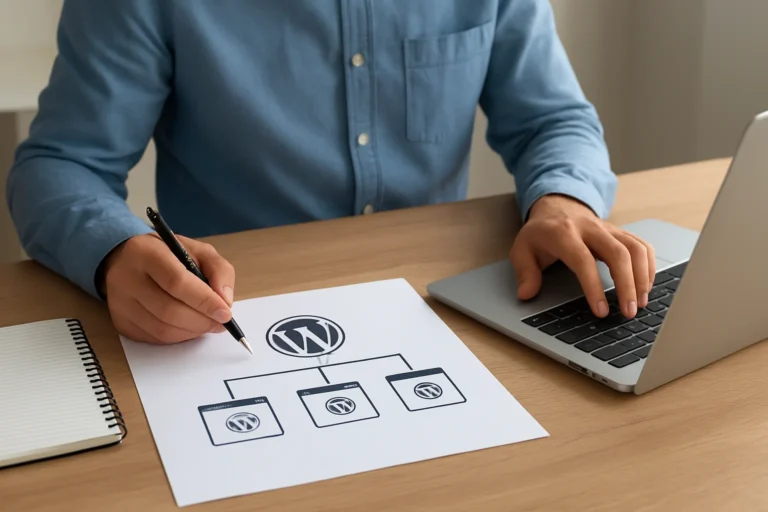
- Information architecture and page planning
- Content writing focused on clarity and search intent
- Design and development with mobile-first performance in mind
- SEO, GEO and AEO optimisation before launch
- Testing, tracking setup, and post-launch improvements
This approach is also useful for other sectors that need to present services clearly and qualify requests, such as packaging manufacturer website tunisia, physiotherapist website development tunisia, psychologist website development tunisia, and notaries tunisia what professional. The principle is the same: explain the offer, build trust, and guide the visitor toward the right action.
What should you avoid on a joinery website?
Some mistakes reduce trust immediately. Others make the site harder to find or harder to use. The most common problem is trying to say too little while expecting the website to generate serious enquiries.
- Generic text with no product detail
- Too many photos without explanation
- Poor mobile experience
- Forms that do not qualify the project
- No local SEO structure
- No clear call to action
FAQ
Should a joinery website focus more on design or content?
Both matter, but content should come first. A clean design helps trust, but the visitor still needs clear information about models, materials, and project suitability.
How many product pages should a joinery company have?
Enough to separate the main product families clearly. A single page for everything is usually too vague. Separate pages improve SEO, clarity, and lead quality.
Can a website really reduce low-quality enquiries?
Yes. When the site explains your services, service area, and project requirements clearly, many unsuitable requests are filtered out before they reach your team.
Is local SEO important for joinery companies in Tunisia?
Yes. Many clients search by city or region when looking for a supplier or installer. Local visibility helps you appear in the right searches and attract nearby projects.
When should a joinery company redesign its website?
When the site no longer reflects the quality of your work, when enquiries are weak, or when the structure makes it hard to present your models and services clearly.
Need a website that presents your models and qualifies the right projects?
A joinery website should do more than exist. It should help your company be found, be understood, and generate serious project enquiries. That requires a clear structure, strong product presentation, and a commercial approach to SEO and conversion.
If you want a website that supports your business instead of just displaying it, THE ROAD can help with a professional approach built for visibility, credibility, and qualified leads.
You have a web project, a redesign, or an SEO need? THE ROAD can support you with a clear, professional, and results-oriented approach.