Click and collect is no longer just a convenience feature. For many retailers, it is a practical way to increase sales, reduce friction at checkout, and bring more qualified customers into the store.
The real challenge is not launching the option. The real challenge is connecting your e-commerce site, your inventory, and your store operations so the experience stays reliable for both customers and staff.
Quick answer: what does click and collect actually do for a business?
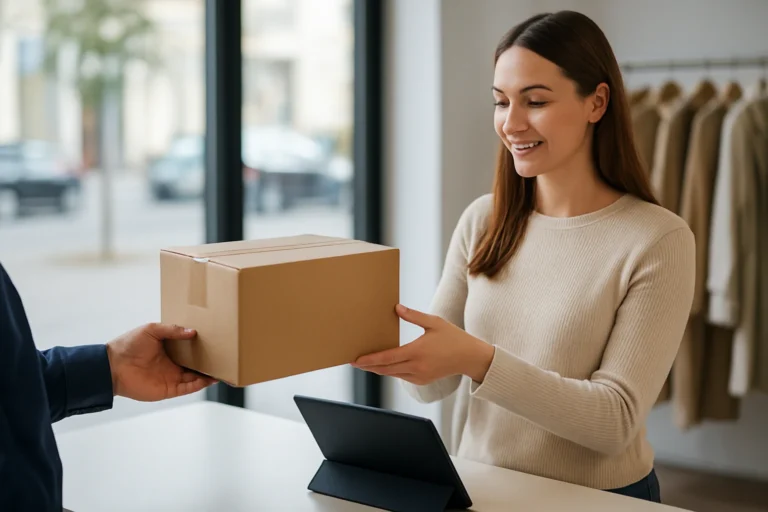
Click and collect lets customers buy online and pick up their order in a physical store. It works best when the website, stock management, payment flow, and store process are aligned from the start.
For the business, the value is clear: better conversion, lower delivery pressure, more store visits, and a smoother path from search to purchase. When the system is poorly connected, it creates stock errors, delays, and lost trust.
Table of contents
Why does click and collect matter for sales and customer experience?
Click and collect solves a simple problem: some customers want the speed of online shopping, but they still want the reassurance of picking up the product themselves. That is especially useful for urgent purchases, fragile products, or items customers prefer to inspect before leaving.
From a business point of view, this model can improve conversion because it removes one of the main barriers to purchase: delivery time. It also brings people into the store, which creates opportunities for upsell, repeat visits, and stronger customer trust.
A slow website does not only create a technical problem. It creates a business problem, because visitors leave faster, Google has more difficulty crawling the pages and potential clients may lose trust before contacting the company.
What needs to be connected between the website and the store?
A successful click and collect setup depends on more than a checkout button. The website must communicate with the store’s operational reality.
Core elements that must work together
- Inventory: the site must show products that are actually available for pickup.
- Order management: staff must receive orders clearly and quickly.
- Pickup rules: the customer must know when and where to collect the order.
- Payment flow: online payment, deposit, or pay-on-pickup must be defined.
- Notifications: email or SMS updates should confirm order status.
When these elements are disconnected, the customer experience breaks down. The result is often the same: abandoned orders, more support calls, and lower confidence in the brand.
What are the best technical options?
The right solution depends on your catalog size, your store network, and your current website platform. A small retailer does not need the same architecture as a multi-location brand.
| Option | Best for | Advantages | Limits |
|---|---|---|---|
| Manual click and collect process | Small stores with low order volume | Simple to launch, low cost | Higher risk of errors, harder to scale |
| Website connected to stock by plugin or app | SMEs and growing retailers | More reliable inventory control, better automation | Requires proper setup and testing |
| Custom integration with POS or ERP | Multi-store or complex operations | Strong operational control, better scalability | Higher initial investment, more technical work |
The best choice is not always the most advanced one. The best choice is the one that protects the customer experience while matching your internal capacity.
How should a business implement click and collect step by step?
A structured rollout reduces operational mistakes and makes the feature easier to adopt internally.
1. Define the pickup promise
Start with the business rules. Decide where customers can collect orders, how long preparation takes, and whether pickup is available for every product or only selected items.
2. Align stock logic
Inventory must be accurate enough to avoid overselling. If a product is sold online but no longer available in the store, the customer experience is damaged immediately.
3. Design the customer journey
The checkout flow should clearly show pickup availability, location, time window, and instructions. The objective is simple: be found, be understood and generate contact.
4. Train the store team
Even a good website fails if the store team does not know how to process orders. Staff need a clear workflow for preparation, confirmation, handover, and issue resolution.
5. Test before launch
Test the full journey from product page to pickup confirmation. A small error in notifications, stock sync, or pickup instructions can create a poor first impression.
How does click and collect affect SEO, GEO and AEO?
Click and collect is not only an operations topic. It also affects how people find and understand your business online.
From an SEO perspective, dedicated pickup pages can target search intent such as store pickup, same-day collection, or local product availability. That improves local visibility and helps the business capture users who are ready to buy.
From a GEO and AEO perspective, the content structure matters. Clear headings, direct answers, and concise service explanations make it easier for AI search engines and answer engines to understand what your business offers.
That is why the website should not be built as a generic catalog. It should be structured to support search intent, local relevance, and conversion.
At THE ROAD, the objective is not only to create a website that looks clean. The objective is to build a digital presence that is fast, credible, locally visible, and capable of supporting business growth through SEO, GEO, AEO, and conversion-focused design.
What is the real business impact?
Click and collect can improve revenue in several ways. It can reduce cart abandonment, increase store traffic, and make the brand more convenient for customers who want speed without delivery fees.
It can also support omnichannel strategy. A customer who discovers a product online may later buy accessories in store, request advice, or return for a repeat purchase. That is why click and collect is not just a logistics feature. It is a commercial bridge between online demand and offline sales.
For businesses in sectors such as construction company website development, recruitment agency website development, or learning platform website development, the same principle applies: the website must support a real business process, not just display information.
The same logic is true for service-driven businesses like psychologist website development tunisia and physiotherapist website development tunisia. The website should reduce friction, build trust, and make the next action obvious.
Even in highly regulated or trust-sensitive sectors such as notaries tunisia what professional, the digital experience must be clear, structured, and credible.
What should you avoid?
- Showing pickup as available when stock is not reliable.
- Using unclear pickup instructions.
- Forgetting to notify the store team in real time.
- Launching without testing the full order flow.
- Separating the website strategy from store operations.
These mistakes are costly because they affect both trust and efficiency. A customer who has a bad pickup experience may not complain immediately, but they are less likely to order again.
FAQ
Is click and collect only useful for large retailers?
No. Small and medium businesses can benefit too, especially when customers want fast pickup or prefer to avoid delivery fees. The key is to keep the process simple and reliable.
Do I need custom development to launch click and collect?
Not always. Some businesses can use plugins or platform features. Custom development becomes relevant when stock logic, store operations, or multi-location workflows are more complex.
Can click and collect improve SEO?
Yes, if it is supported by clear local pages, structured content, and strong internal linking. It can help capture search intent related to store pickup and local buying options.
What is the biggest risk when connecting online and offline sales?
The biggest risk is inconsistency between what the website promises and what the store can actually deliver. That gap creates customer frustration and damages credibility.
When should I contact an agency?
Contact an agency when your website, stock, and store operations need to work together without errors. A professional team can design the right structure, reduce friction, and protect conversion.
Need a click and collect setup that supports sales, not just traffic?
Click and collect works when the website, the store, and the operational process are built as one system. That is what turns a feature into a commercial advantage.
Vous avez un projet web, une refonte ou un besoin SEO ? THE ROAD peut vous accompagner avec une approche claire, professionnelle et orientée résultats.