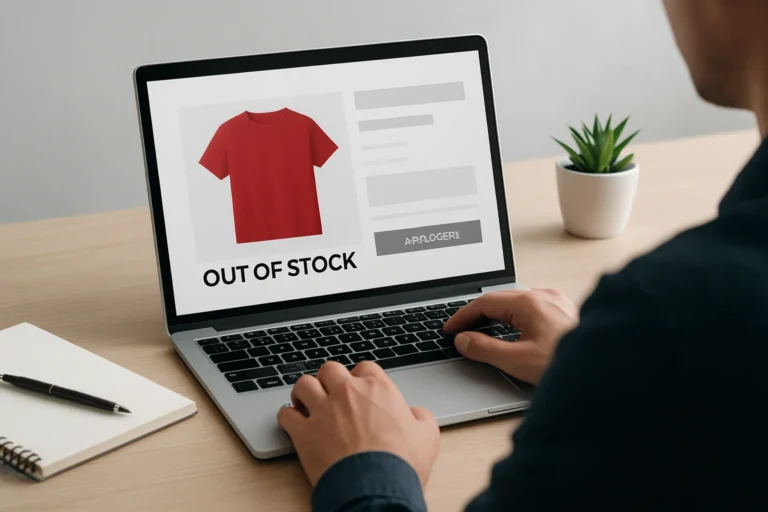
When a product goes out of stock, the page should not automatically disappear. That is where many e-commerce sites lose visibility, links, and potential revenue. The real issue is not only inventory management. It is how the page is handled once demand still exists but supply is temporarily gone.
A well-managed out of stock page can keep ranking, preserve commercial intent, and guide the visitor toward a useful next step. A poorly managed one can create broken journeys, waste SEO equity, and reduce trust. The objective is simple: keep the page useful for users and valuable for search engines.
Direct answer: should an out of stock page be kept online?
Yes, in most cases. If the product may return, the page should usually stay live and be optimized rather than deleted. That allows the page to keep its backlinks, historical relevance, and search visibility.
The right action depends on the business situation. Temporary stock issues, seasonal products, and recurring catalog items should be treated differently from discontinued products. The decision should protect both SEO value and customer experience.
Table of contents
Why does an out of stock page still matter for SEO?
A product page often accumulates value over time. It may rank for product-specific searches, attract backlinks, and answer a clear purchase intent. If the page is removed too quickly, that value can disappear with it.
This is especially important for e-commerce sites that sell specialized products, recurring inventory, or products with strong brand demand. For example, a page that performs well for construction company website development style niche searches may not need to vanish simply because one item is unavailable. The page can still serve as a landing point for users looking for alternatives or a future restock.
A slow or broken replacement strategy creates a business problem, not only a technical one. Visitors who land on a dead page may leave immediately, Google may waste crawl budget, and the brand may lose credibility at the exact moment the user was ready to buy.
What are the best options when a product is out of stock?
There is no single rule. The right choice depends on whether the product will return, whether there is a replacement, and how strong the page is in search.
| Situation | Recommended action | Business impact |
|---|---|---|
| Temporary stock shortage | Keep the page live, mark it as out of stock, and offer alerts or alternatives | Preserves rankings and captures future demand |
| Seasonal product | Keep the page live and explain when it will return | Maintains relevance for recurring searches |
| Discontinued product with close replacement | Redirect to the most relevant alternative only if the replacement truly matches intent | Protects users from dead ends |
| Discontinued product with no equivalent | Keep the page if it has SEO value, but present alternatives and clear context | Retains traffic and reduces loss of authority |
The wrong move is often to redirect everything to the homepage. That may look tidy from a technical point of view, but it usually creates a poor user experience and weakens relevance. Search engines and users both prefer a destination that matches intent.
How do you preserve SEO value without frustrating visitors?
The page should answer the visitor’s next question immediately. If the product is unavailable, the user needs to know whether it will return, whether there is a substitute, and what action to take now.
Keep the page indexable when it still has value
If the page has existing rankings, links, or search demand, leaving it indexable is often the safest choice. Removing it too early can cause traffic loss that is difficult to recover.
Add clear commercial alternatives
Show related products, similar categories, or a contact option. This is especially useful for businesses that sell services or specialized products, such as psychologist website development tunisia or physiotherapist website development tunisia, where the visitor is often comparing options and needs a clear next step.
Use honest stock messaging
Do not hide the problem. A clear message such as “Currently out of stock” is better than an empty page or a misleading call to action. Trust is part of conversion.
Capture demand instead of losing it
Offer email alerts, restock notifications, or a request-for-availability form. This turns a temporary stock issue into a lead capture opportunity.
What is the best step-by-step process?
1. Check the page’s SEO value
Look at organic traffic, backlinks, rankings, and conversion history. A page with strong performance should not be treated like a low-value page.
2. Identify the product status
Is it temporarily unavailable, seasonal, permanently discontinued, or replaced by a newer version? The answer determines the right technical action.
3. Decide the page’s future
Keep it live, improve it, redirect it, or retire it. The decision should be based on search intent and business relevance, not convenience.
4. Improve the page content
Add a short explanation, alternatives, and helpful internal links. For some businesses, this is also a good moment to connect the page to broader services such as learning platform website development or recruitment agency website development if the catalog structure supports related intent.
5. Monitor results
Track impressions, clicks, bounce rate, and conversions after the change. If traffic drops sharply, the handling strategy may need adjustment.
What is the business impact of handling out of stock pages well?
Good handling protects more than rankings. It protects revenue, brand trust, and the efficiency of your acquisition funnel. A page that keeps its SEO value can continue bringing qualified visitors even when the product is unavailable.
For commercial teams, this means fewer wasted visits and better use of existing content assets. For marketing managers, it means preserving search visibility without creating a poor customer journey. For CEOs and founders, it means turning inventory problems into controlled digital outcomes instead of silent traffic loss.
At THE ROAD, the objective is not only to manage a technical page status. The objective is to keep the website commercially useful, credible, and aligned with search intent. That is the difference between a site that simply exists and a site that supports growth.
How do SEO, AEO and GEO apply to out of stock pages?
SEO focuses on preserving rankings, internal link equity, and crawl efficiency. The page should remain understandable to search engines and relevant to the query.
AEO focuses on direct answers. A user should immediately understand whether the product is unavailable, when it may return, and what to do next. Clear headings and short explanations help answer engines extract the right information.
GEO matters because AI search systems prefer structured, explicit content. Pages that clearly state product status, alternatives, and next actions are easier to cite and reuse in AI-driven results.
A good structure helps both users and search engines. That is why SEO should not be added after the website is finished. It should be planned from the beginning, including how product pages will behave when stock changes.
What should you avoid?
- Deleting valuable pages without checking their traffic or backlinks.
- Redirecting every unavailable product to the homepage.
- Leaving the page empty with no explanation.
- Using misleading calls to action that suggest the product is available.
- Allowing internal links to point to dead or irrelevant destinations.
These mistakes create a weak user experience and reduce the site’s commercial performance. They also make it harder for search engines to understand which pages still matter.
FAQ
Should an out of stock product page be deleted?
Not usually. If the page has rankings, backlinks, or future demand, it is better to keep it live and improve it. Deleting it too fast can waste SEO value.
Should I redirect an out of stock page to another product?
Only if the replacement is truly relevant. A close match can work well, but a generic redirect to the homepage usually hurts both relevance and trust.
Can an out of stock page still convert?
Yes. It can capture leads through restock alerts, alternative product links, or contact forms. The page should guide the visitor instead of ending the journey.
What if the product will never come back?
Keep the page only if it still has SEO value or useful traffic. Otherwise, redirect it to the most relevant alternative or category page.
How do I know if a page is worth keeping?
Check organic traffic, rankings, backlinks, and conversion potential. If the page already performs, it usually deserves a controlled strategy instead of removal.
Need a smarter way to handle product pages?
Out of stock pages are not a minor catalog detail. They are part of your visibility, credibility, and conversion strategy. Handled well, they keep value alive and support future sales.
Chez THE ROAD, l’objectif n’est pas seulement de créer un site web visuellement propre. L’objectif est de construire une présence digitale claire, rapide, crédible et capable de soutenir la croissance de l’entreprise.
You have a web project, a redesign, or an SEO need? THE ROAD can support you with a clear, professional approach focused on results. Request a quote or ask for a technical review of your product pages.